
Communications equipment
TS700 Pro/Lite: industrial LTE router with dual SIM
Takes data from reclosers, RTUs, meters and other field devices to the SCADA or the customer platform, over a public or private cellular network.

What it is for
Connect field devices to the SCADA
Reclosers, RTUs, meters and other devices connect through serial or Ethernet ports and go out over the cellular network, with transparent DNP3 over IP and MQTT to cloud platforms.
Keep the link up
Dual SIM with automatic switching between carriers, and link backup between Ethernet and cellular. eSIM is offered on request and mounted at the factory.
Run in the field, manage it remotely
Operates from −40 to +70 °C, mounts on a DIN rail and is managed remotely: native VPN, SSH console, SNMP and remote firmware update (FOTA).
There are two versions: Pro, with two modems, Gigabit Ethernet and more interfaces, and Lite, with one modem. The M model works at 410/450 MHz for licensed private LTE networks deployed by the carrier. Two models are under development and not yet delivered: the M-MW (NB-IoT, bands not yet defined) and the M-M4 (Cat-M1 and Cat-4 in one device). Special configurations (other bands, interfaces or integrations) are assessed per project.
Technical specifications
Models and cellular communication
- TS700M-4 (the standard)
- Cat-4, with 3G/2G fallback
- TS700M-M
- Cat-M1 · 410/450 MHz
- TS700M-MW
- NB-IoT · under development
- TS700M-M4
- Cat-M1 and Cat-4 · under development
- Cat-4 · speed
- DL 150 Mbps / UL 50 Mbps
- Cat-4 · LTE bands
- B1 2 3 4 5 7 8 28 66 · B40 (others on request)
- M-4 fallback
- 3G B1 2 3 4 5 8 · quad-band 2G
- Cat-M1 · speed
- DL 588 kbps / UL 1 Mbps
- Cat-M1 · bands (M)
- B1 3 8 20 28 31 72 87 88 · 410/450 MHz: B72, B87 and B88
- RF power (M)
- 21 dBm · 410/450 MHz: 23 to 26 dBm
- Cat-M1 features
- PSM · eDRX · extended coverage
Construction and power
- Power supply
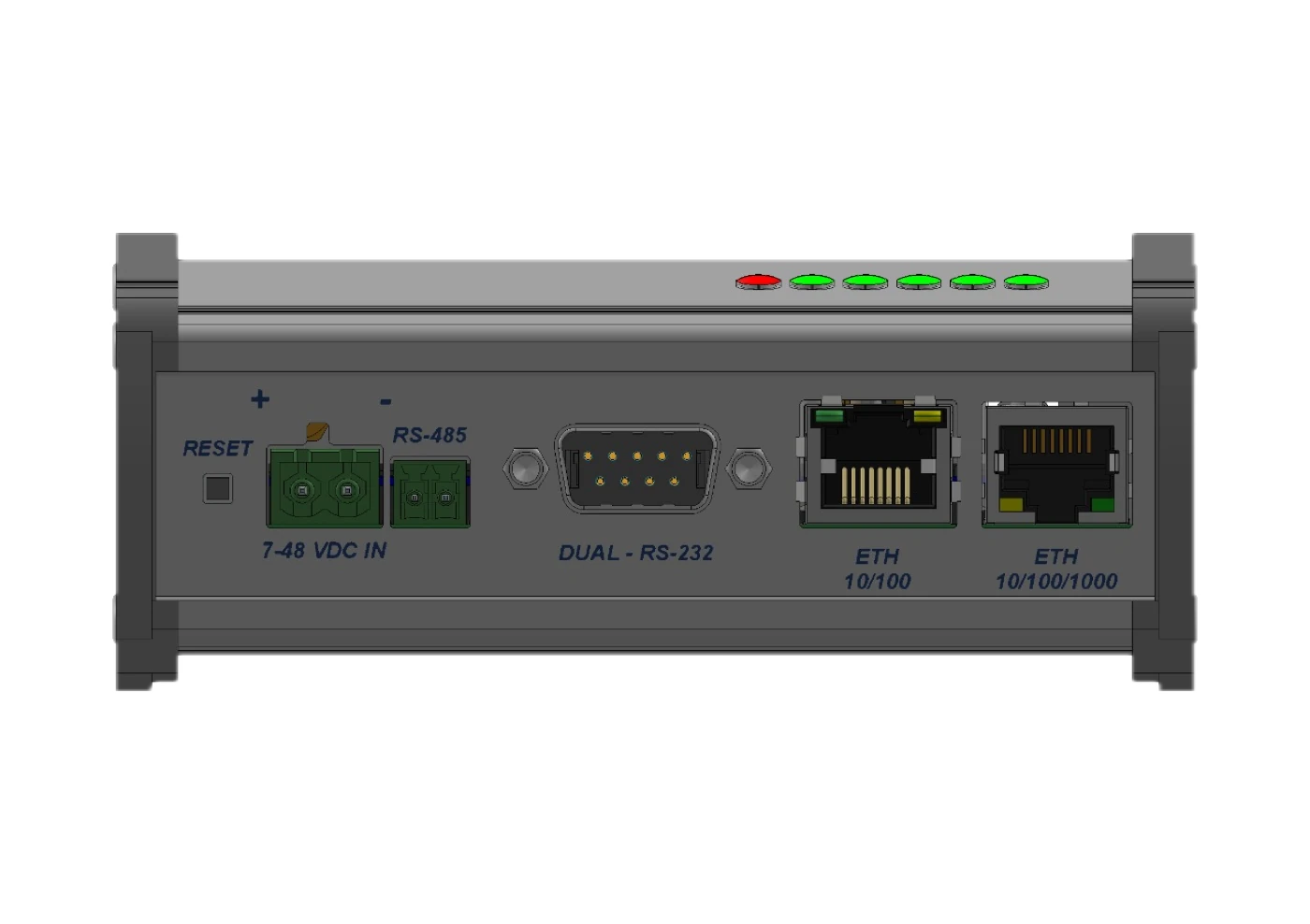
- 7–48 VDC
- Typical consumption
- 2.2 W
- Battery (Pro only)
- Li-Ion 18650, optional
- Enclosure
- Aluminum RAL 7035 and PVC
- Dimensions
- 142 × 121 × 50 mm
- Mounting
- DIN rail
- Protection rating
- IP50
- Operating temperature
- −40 to +70 °C
SIM, interfaces and system
- SIM slots
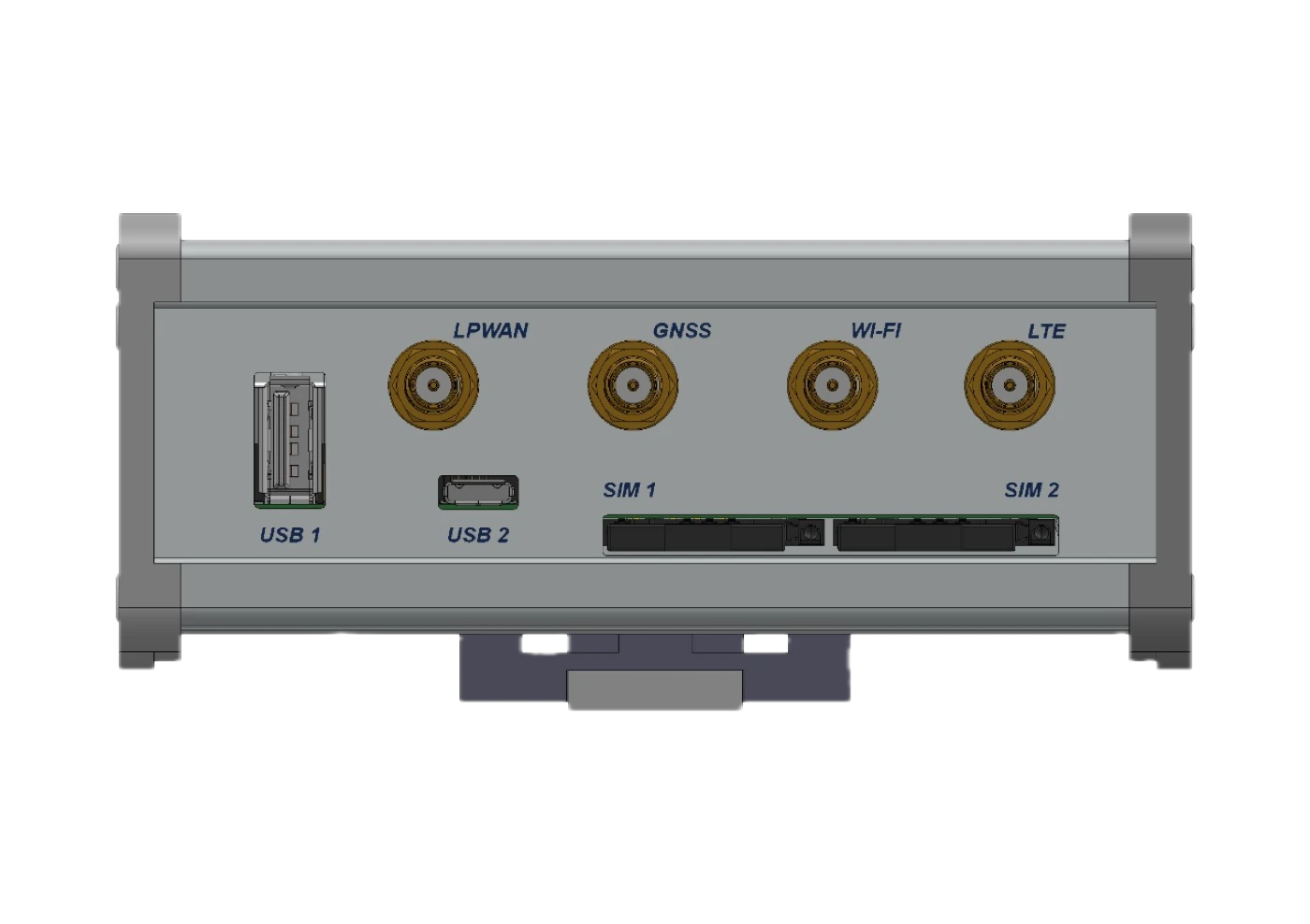
- 2 × SIM, or SIM + eSIM
- eSIM
- On request, mounted at the factory
- Switching
- Automatic between carriers
- Link backup
- Ethernet ↔ cellular
- Serial (DB9 male)
- 2 × RS-232, or RS-232 + RS-485
- Ethernet 10/100
- 1 × RJ-45
- USB
- Host 2.0 · micro USB serial
- Antennas
- SMA female
- Optional
- Wi-Fi (configuration only) · GNSS · battery
- Processor and memory
- MIPS 580 MHz · 128 MB RAM · 32 MB Flash
- Operating system
- Linux OpenWrt
- Routing
- Static and dynamic (RIP1/RIP2, OSPF) · VLAN · VRF · DHCP · DDNS · bridge mode
Pro and Lite versions
- mPCIe modems
- Pro: 2 · Lite: 1
- Gigabit Ethernet
- Pro: 1 × RJ-45, copper · Lite: not included
- Micro USB serial and USB Host 2.0
- Pro: included · Lite: optional
- Li-Ion 18650 battery
- Pro: optional · Lite: not included
- Status LEDs
- Pro: ERR, TX1, TX2, SIM1, SIM2, COM · Lite: ERR, TX1, SIM1, COM
Specifications subject to change without notice. Final configurations are defined per project.
How it integrates
Public or private cellular network
The M-4 is the standard model: 4G (Cat-4) with 3G/2G fallback. The M uses Cat-M1 and reaches 410/450 MHz, for private networks deployed by the carrier. Two SIM slots, or SIM and eSIM.
Protocols and SCADA
Transparent DNP3 over IP, serial server and client, and MQTT to cloud platforms. IEC 104 through an internal converter is under development. The device does not support IPv6.
Management and security
Local and remote web page, SSH console, SYSLOG and SMS. SNMP v1/v2 with the device health status. VPN with OpenVPN, IPsec, DMVPN, GRE and WireGuard, and SPI firewall. The optional Wi-Fi is for configuration only.